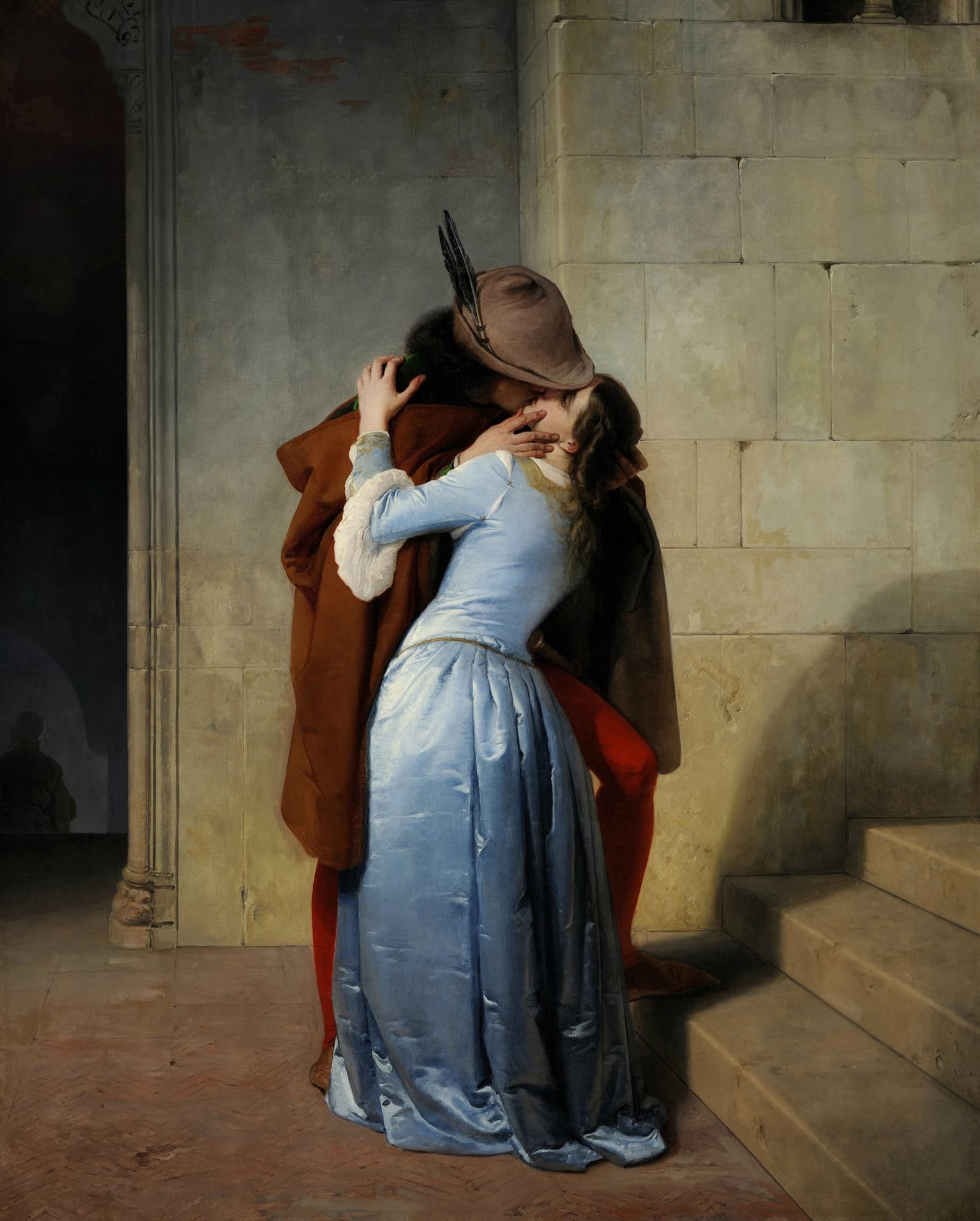
Artist
Francesco Hayez
Works (1)

Timeline
Born in 1791 to a poor Venetian family with a French fisherman father, Hayez showed early talent and was initially trained as a restorer by his antiquarian uncle.1
In 1809, he moved to Rome and met sculptor Antonio Canova, who became a vital mentor and patron, influencing his early Neoclassical style through the study of Raphael.1
Commissioned by Canova for Vatican frescoes, Hayez was dismissed due to indecisiveness and slowness, a setback that led him to focus on history painting and portraiture.1
While in Rome, he interacted with Ingres and famously beat him to win first prize in a 1816 competition at the Accademia di San Luca, proving his exceptional skill.1
His 1820 work 'Pietro Rossi' used medieval history to pioneer a new style, becoming a manifesto for Italian Romanticism and marking his shift away from Neoclassicism.1
Moving to Milan in 1823 to teach at the Brera Academy, he became a leading figure in the city's artistic and literary circles, befriending figures like Alessandro Manzoni.1
Characterized by dramatic emotion and refined color, as seen in his 1823 'Romeo and Juliet,' his style was praised by Romantics despite criticism from Classicists.1
Dominating the Italian art scene for over half a century until his death at 91 in 1882, Hayez played a crucial role in the formation of modern Italian art.1