Artist
Rowland Lockey
Works (1)
Timeline
In 1581, Lockey was apprenticed to Nicholas Hilliard, Queen Elizabeth's miniaturist, for eight years. He learned miniature painting and goldsmithing from his master, forming the basis of his later style.1
He associated with Dutch and Flemish painters in 1580s London. He was part of an international network, inheriting painting manuals from the artist Peter Matheeusen.1
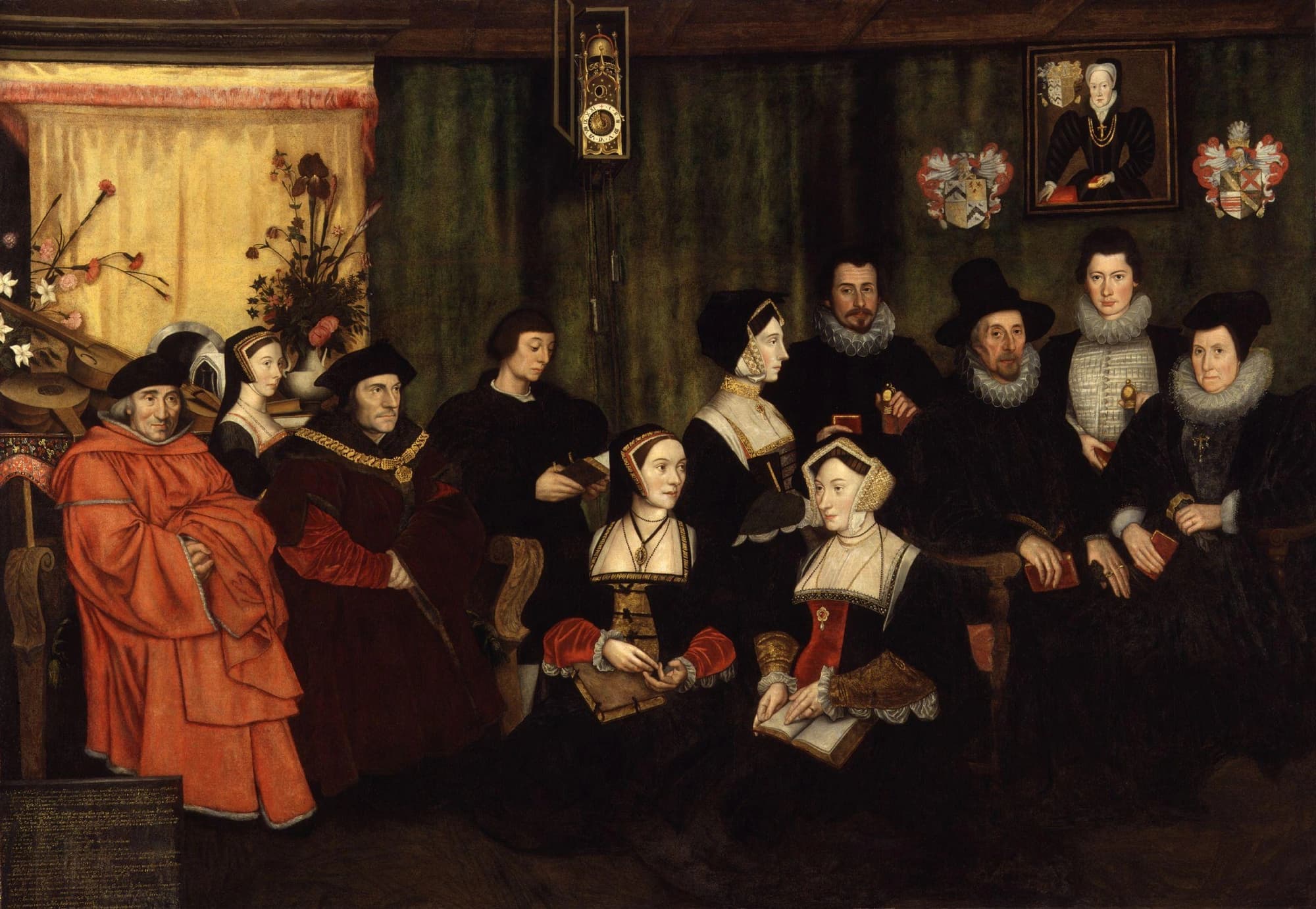
Lockey's best-known works are copies of Hans Holbein's lost masterpiece, 'The Family of Sir Thomas More'. These are valuable records of the original destroyed by fire in the 18th century.1
He was patronized by Bess of Hardwick and her son Sir William Cavendish. From 1591, he produced over 40 life-size pictures, including portraits of their ancestors.1
In the More family portrait c. 1593, descendants not in Holbein's original were added at the patron's request. It commemorated five generations, creating a cross-generational family gathering.1

By 1600, Lockey was made a master of the Worshipful Company of Goldsmiths, establishing a solid status in London. His craftsmanship supported his production of detailed portraits.1
Besides miniatures on vellum, he handled engraving for Bible titles and gilding frames. His background as a goldsmith was reflected in his decorative and versatile artistic techniques.1
Lockey's portrait of Mary, Queen of Scots, is said to have served as the model for her tomb effigy at Westminster Abbey, playing a significant role as a historical record.1