Artist
Max Beckmann
Works (1)

Timeline
1914
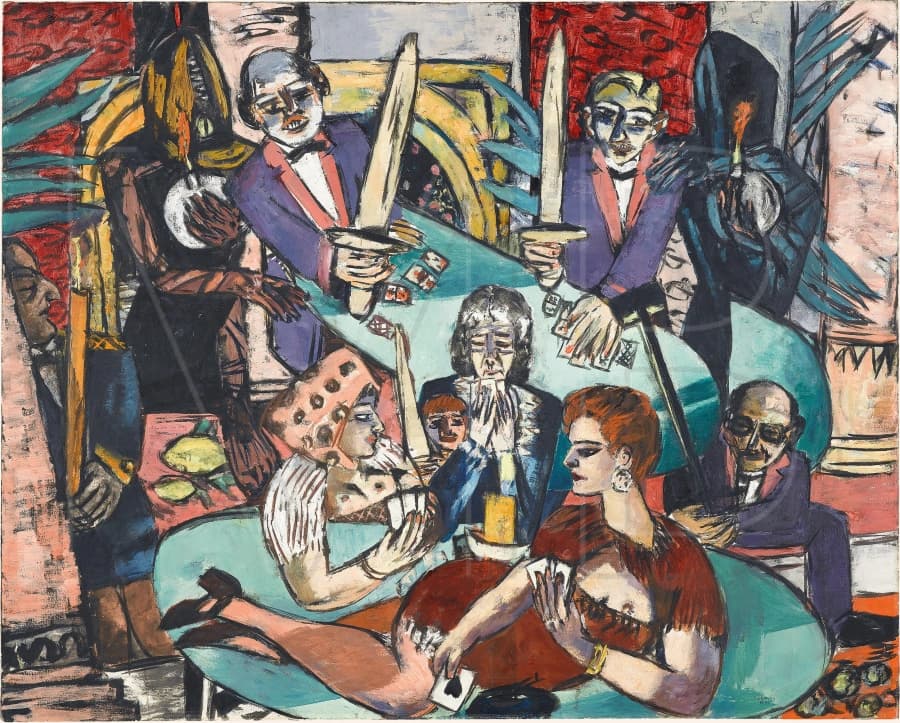
His traumatic experiences as a medical orderly in WWI caused his style to shift from academic realism to distorted figures and space.1
1920
In the 1920s, he was associated with New Objectivity (Neue Sachlichkeit), opposing emotionalism with brutal realism and social criticism.1
1925
In 1925, he taught at the Städelschule in Frankfurt and enjoyed great success, receiving the Honorary Empire Prize for German Art in 1927.1
1937
1938
He often used musical instruments as symbols; for instance, a horn was used like a telescope to explore the surrounding darkness.1
1947
In 1947, he moved to the US to teach at Washington University in St. Louis, where he met his significant patron, Morton D. May.1