Artist
Conrad von Soest
Works (1)

Timeline
He is believed to have stayed in Paris during the 1380s, gaining expertise in French manuscript illumination and early Netherlandish painting techniques, which informed his sophisticated detail and color palette.1
His career coincided with Dortmund's economic and cultural peak as a leading Hanseatic city. International trade networks allowed the latest artistic trends from France and the Netherlands to reach him and inform his work.1
He introduced the International Gothic style to Northern Germany around 1390, establishing the 'soft style' characterized by elegant and gentle expressions, influencing Northern European painting until the late 15th century.1
He belonged to the patrician elite of Dortmund, then a prosperous Hanseatic city. His 1394 marriage contract was witnessed by powerful figures, including mayors, indicating his high social status as a master painter.1
He resided and operated a thriving workshop on Ostenhellweg, Dortmund's main street. His workshop's influence extended to other notable artists, such as the Master of St. Veronica in Cologne.1
His 1403 Wildungen Altarpiece features the oldest known depiction of eyeglasses north of the Alps. This detail serves as a valuable record of contemporary customs and technology, reflecting his keen interest in realism.1
Gerhard von Soest, recorded as a wealthy member of the Cologne painters' guild in 1417, is likely Conrad's son. In an era of hereditary professions, Conrad's techniques and reputation were passed down to the next generation.1
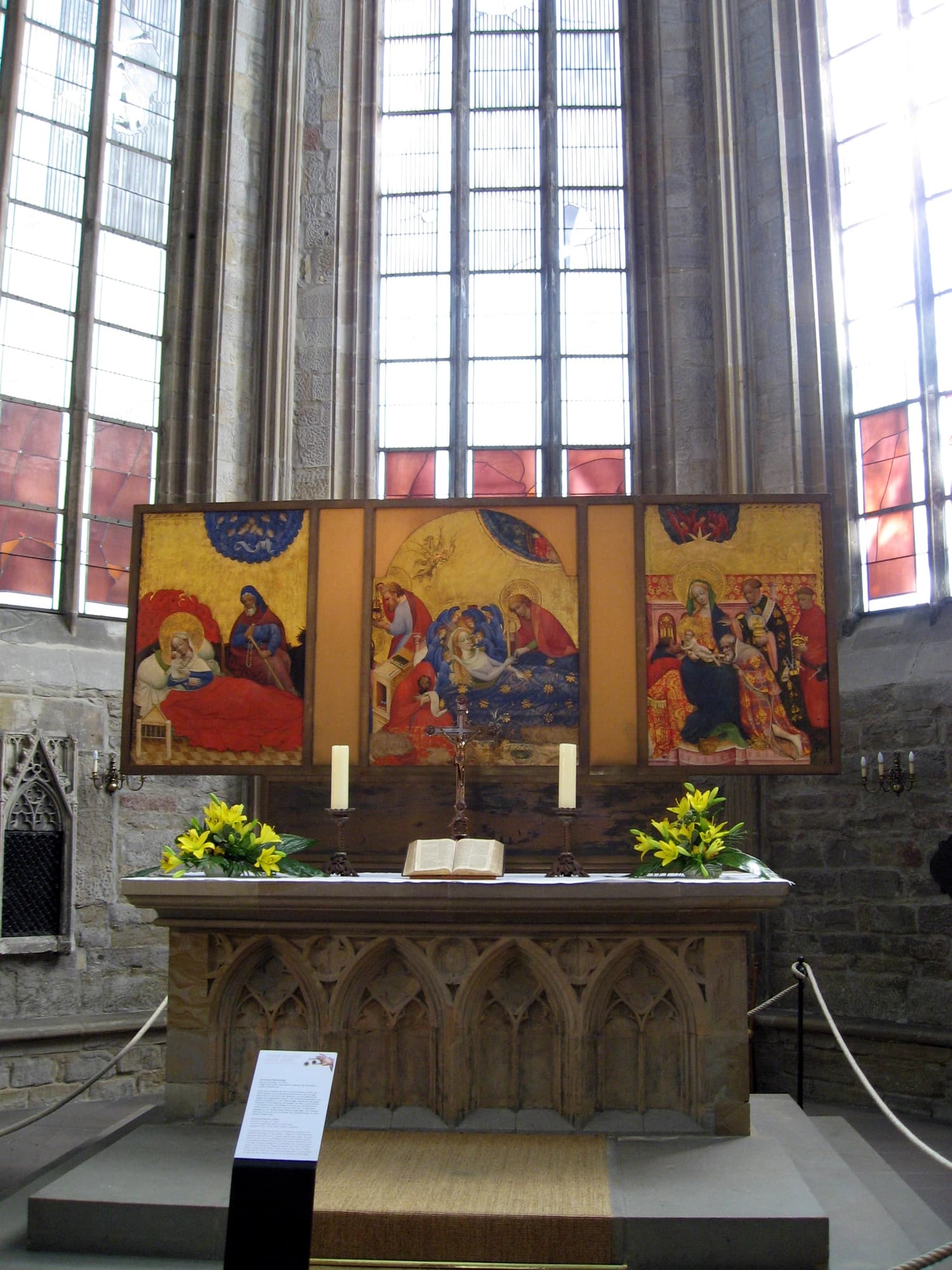
The Marienaltar in Dortmund was unfortunately cut down in 1720 to fit into a Baroque frame. It has since been reassembled in a modern framework, allowing viewers to appreciate its original late-Gothic grandeur.1
Hidden signatures have been found in his works; one in the Dortmund altarpiece was only discovered in the 1950s. This represents an early instance of a medieval artist asserting their individual identity through their work.1
In honor of his achievements, the Konrad-von-Soest Prize for Visual Arts was established in 1954. Named after the medieval master, this award continues to play a significant role in supporting contemporary visual artists.1