Artist
Gustaf Cederström

Timeline
He initially followed his father's military path, becoming an infantry sub-lieutenant in 1864, but resigned in 1870 to pursue his passion for art.1
He studied under Ferdinand Fagerlin in Düsseldorf and Léon Bonnat in Paris, refining his skills in historical painting and portraits before settling in Paris in 1873.1
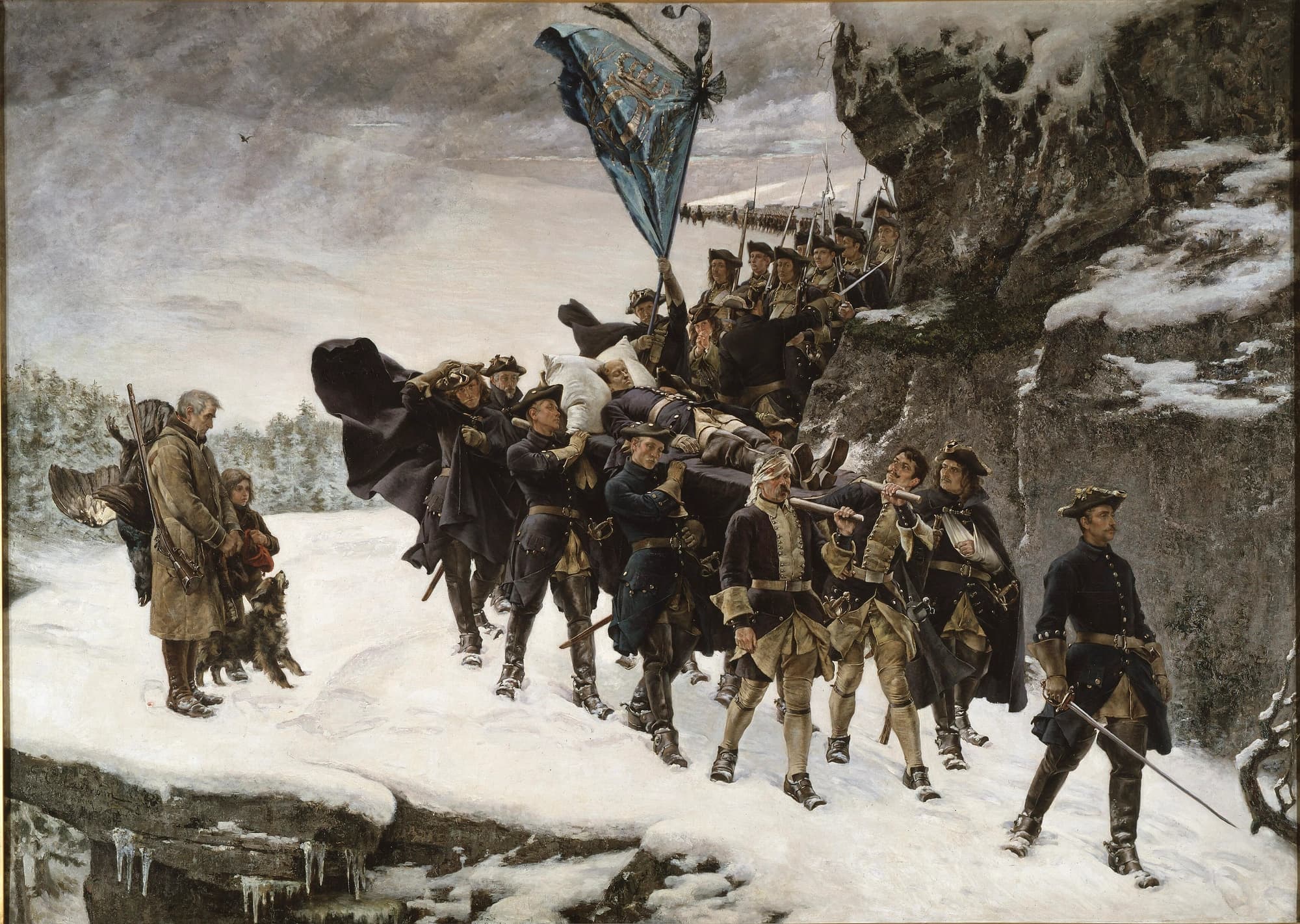
His breakthrough came at the 1878 Paris Exposition with a romanticized scene of King Karl XII's body being carried home, which won him a medal and international acclaim.1
His masterpiece was purchased by Russian Grand Duke Konstantin, but returned to Sweden after the Russian Revolution and is now displayed at the Gothenburg Museum of Art.1
In 1894, he was commissioned for the Nationalmuseum stairwell murals but resigned after a conflict over the subject matter with fellow artist Carl Larsson.1
He was appointed Professor at the Royal Swedish Academy in 1887 and served as its Director from 1899 to 1911, becoming a central figure in the Swedish art world.1
In 1906, he created scenes for the Royal Dramatic Theatre, contributing to public decorations that helped visualize Sweden's national identity.1
In his later years, he turned to writing, publishing his autobiography 'An Old Artist's Memories' in 1926, documenting his life and the art world of his time.1