Artist
Fra Galgario
Works (1)

Timeline
Born in 1655 to a family of painters in Bergamo, he initially trained locally. His father Domenico was a quadratura specialist, and his brother Defendente was also a painter, providing a rich artistic environment.1
In 1675, he moved to Venice and became a friar of the Order of Minims. He maintained a rare dual career, vigorously continuing his painting activities while fulfilling his religious duties at the monastery.1
During his stay in Venice, he worked in the studio of portraitist Sebastiano Bombelli and was greatly influenced by him. His works from this period strongly reflect his master's refined international style.1
In 1702, he refused an invitation to Rome and settled in the Convento del Galgario in Bergamo. He became known as 'Fra Galgario' after the monastery, which remained his base for the rest of his life.1
In Milan, he encountered the work of Salomon Adler and learned a realism akin to Rembrandt. This led to a significant evolution in his style, moving from courtly portraiture to a more raw and powerful realism.1
He was highly acclaimed for his 'character heads'—busts of youths or figures in exotic costumes. Painted with fresh, immediate brushwork, these works gained popularity across Europe beyond the Alps.1
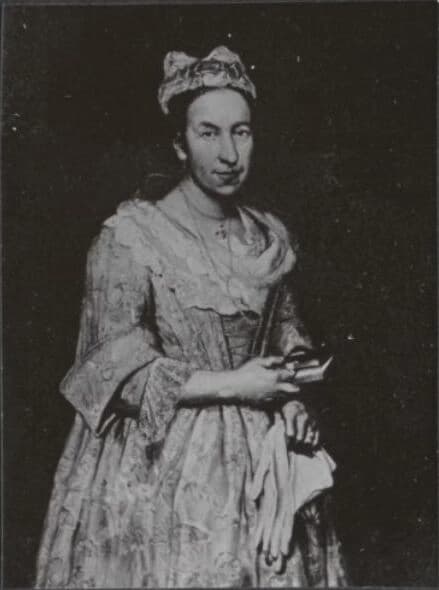
Influenced by the Enlightenment, his portraits went beyond mere likeness. His sharp psychological depictions, hinting at the moral degeneracy of the nobility, are seen as a critical commentary on contemporary society.1
He exchanged rare painting materials with the master Sebastiano Ricci and interacted with the young Tiepolo during his visit to Bergamo. His monastery served as a hub for contemporary artists.1
His late style is characterized by a dissolution of form reminiscent of late Titian. There is a striking anecdote that he once peeled off layers of paint from an old Titian work to discover the secrets of his technique.1