A man never invited into the art world — so where did he place his beauty?
The history of art is often told as the story of "those who were recognized." Trained in the proper way, welcomed into the art establishment, building up acclaim — yet the path Takehisa Yumeji walked seems a little different from any of that.
Yumeji was born in 1884 to a family of sake brewers in Okayama Prefecture. He had no formal art education; he was a self-taught painter. His break came at twenty-two, when a cartoon he submitted to the magazine Chugaku Sekai, "Tsutsu-Izutsu," won first prize. From then on he contributed cartoons to newspapers and magazines, making his name as a rising artist.[1,2,5]
And yet, in his lifetime Yumeji was continually ignored by the art establishment — because, it is said, he was a self-taught popular artist. He was only given his due after the Second World War. He never belonged to the established art world, and spent his whole life out in the open fields, as it were. Recognition was slow to reach him.[1,2]
What he chose instead of recognition: everyday life itself
So where does a person go when they are not recognized? What Yumeji chose was not the inside of the art establishment, but the midst of ordinary life.
In 1914 he opened "Minatoya," designing everyday goods and the covers of sheet music. Decorative chiyogami paper and yukata patterns, book bindings, advertisements — the places where he set his beauty were not inside a frame, but in the things people pick up, wear, and use day to day. For work like this, Yumeji is regarded as one of the pioneers of modern Japanese graphic design.[2,1,4]
He held up "the union of industry and art" as his ideal, and in his later years, during a stay at Ikaho hot spring in Gunma, he is said to have sketched out plans for a "Haruna Mountain Art Institute." To the end, he stayed in the open and kept searching for a new way for art to be.[1]
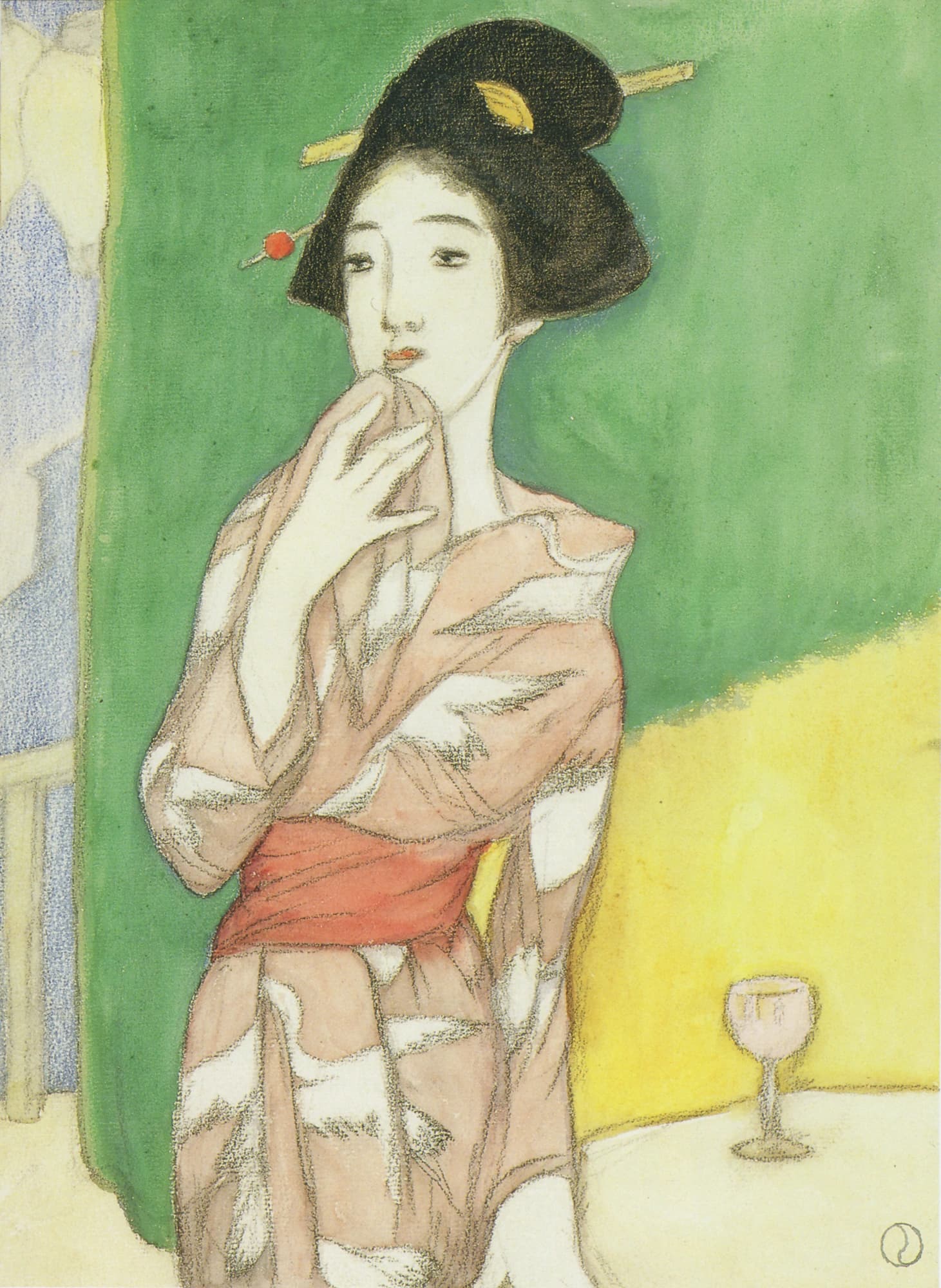
Prints were part of this crossing of borders too. Blue Wine, from his series Twelve Scenes of Nagasaki: a woman in kimono with a wine glass at her side — the modern, cosmopolitan air of a port town seems to settle into a Yumeji-style melancholy.[4]
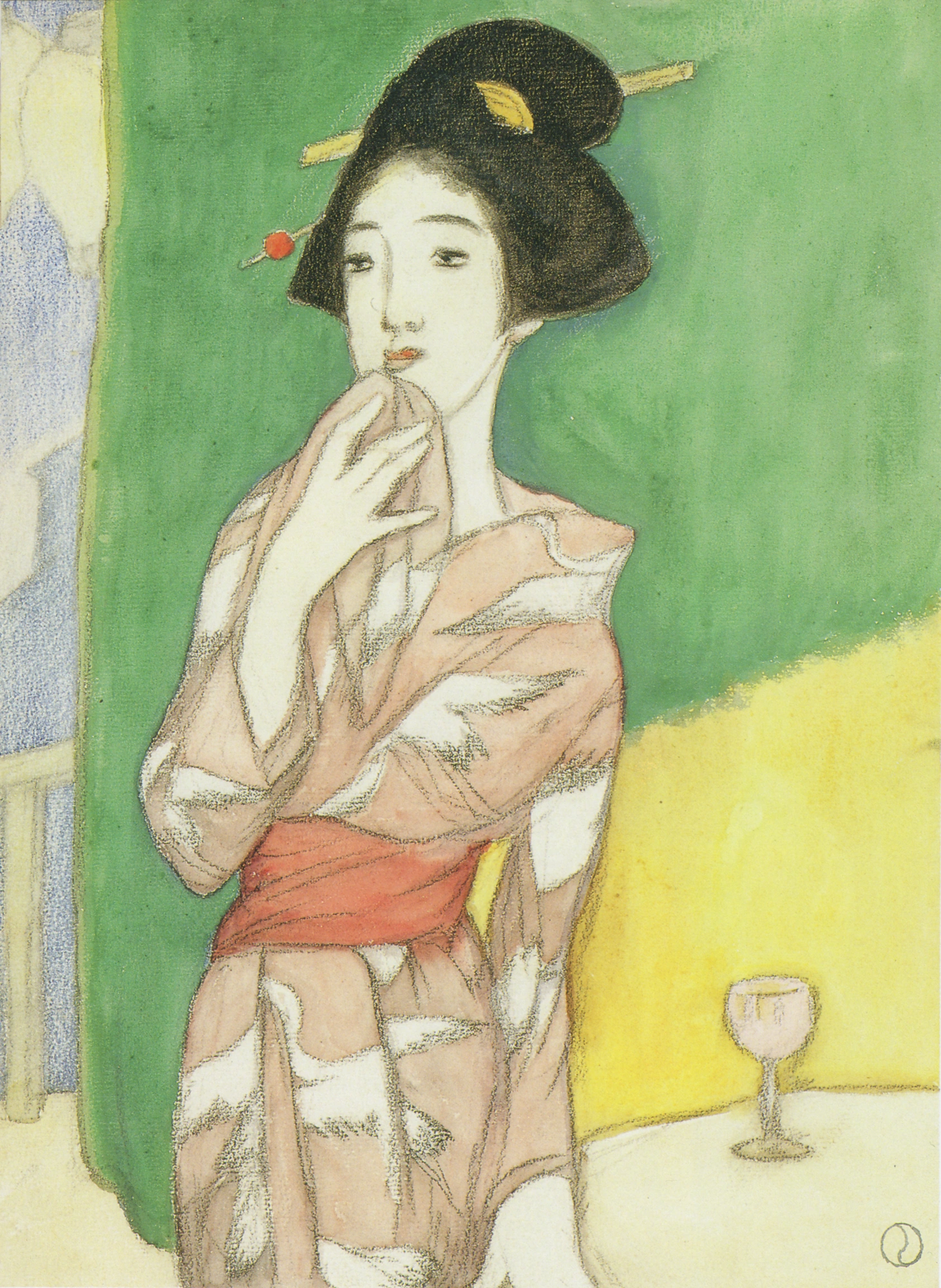
Those large, sorrowful eyes
And when one thinks of Yumeji, it is, after all, that image of a woman. Large eyes tinged with melancholy. A new kind of beauty, unlike the traditional bijin-ga handed down since ukiyo-e. It came to be called the "Yumeji-style beauty," and through art books and magazines it captured the hearts of the public in the Taishō era. It is said to have won tremendous popularity among women, too.[1,2]
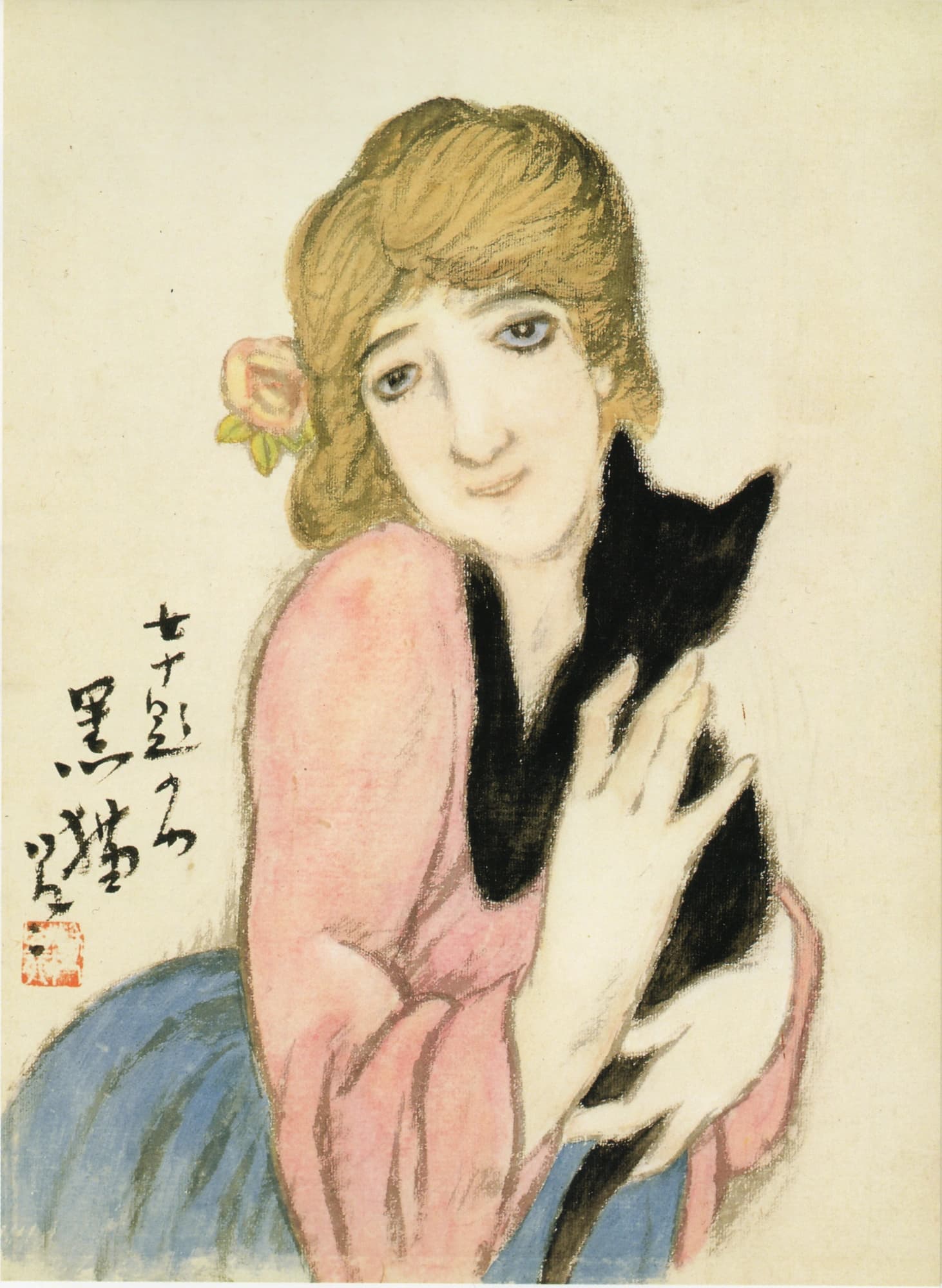
Take Black Cat, from the series Ten Themes of Woman: a black cat held in her arms, and a woman gazing straight out at you. That sorrow-tinged gaze holds the viewer directly.[1]
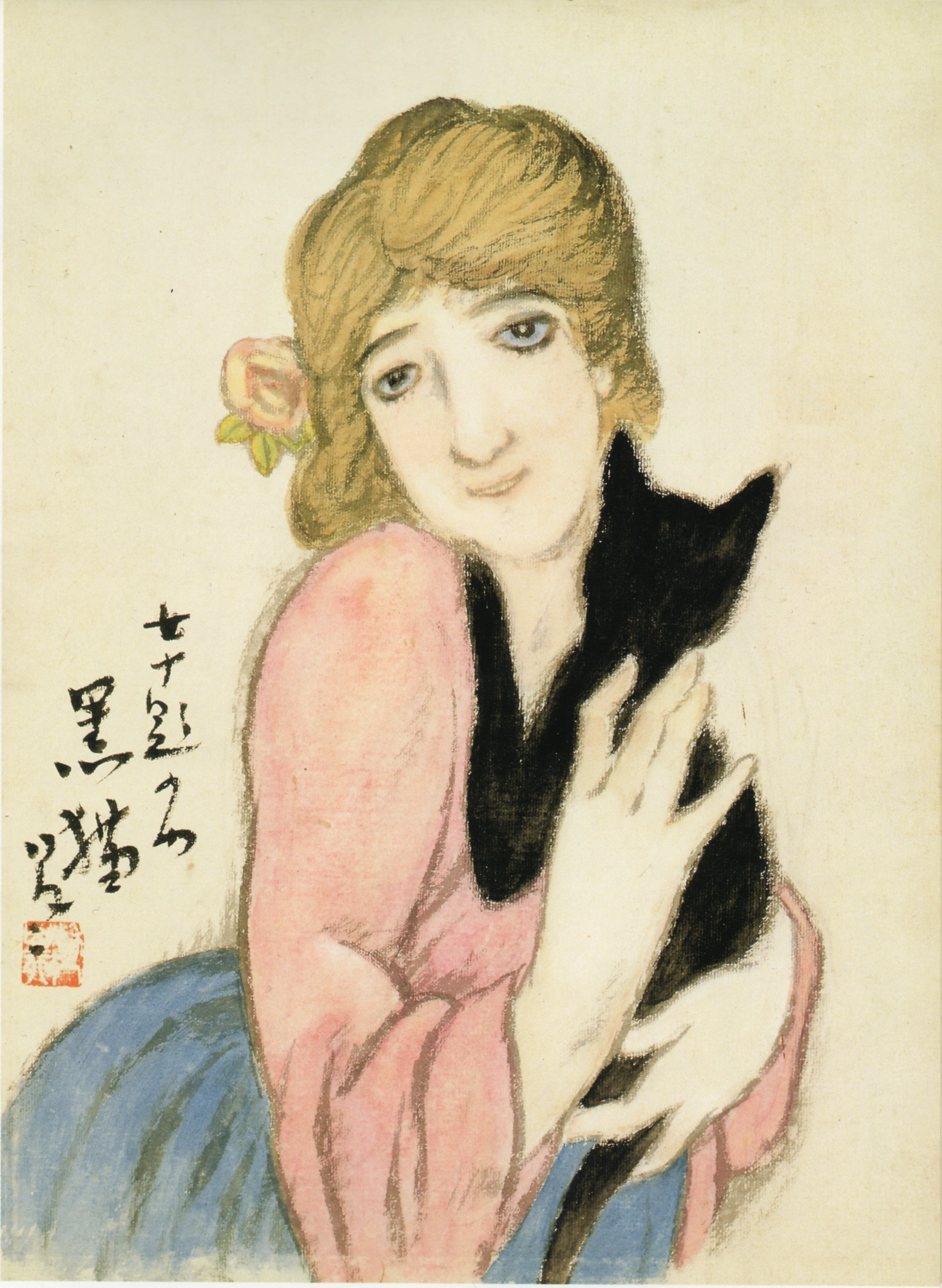
He was not a man of pictures alone
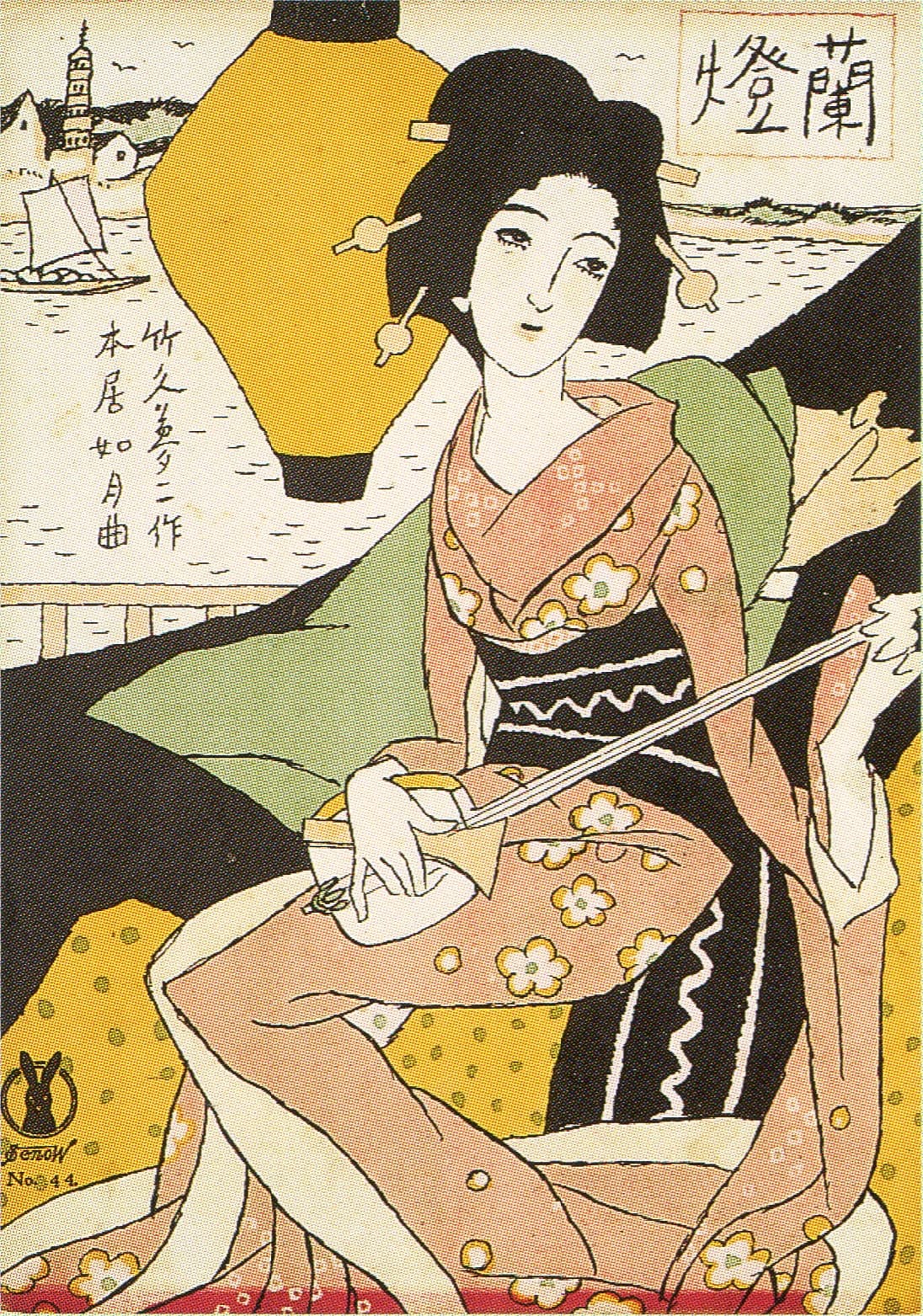
In speaking of Yumeji, one must not forget that he was also a poet. The song "Yoimachigusa," published in 1913, became a social sensation. Set to music, it is said to have become a beloved tune sung across the whole country. And he designed the very sheet music covers themselves. The Senoo score "Rantō" is one example — a work where poetry, music, and design melt into one.[2,1,4]
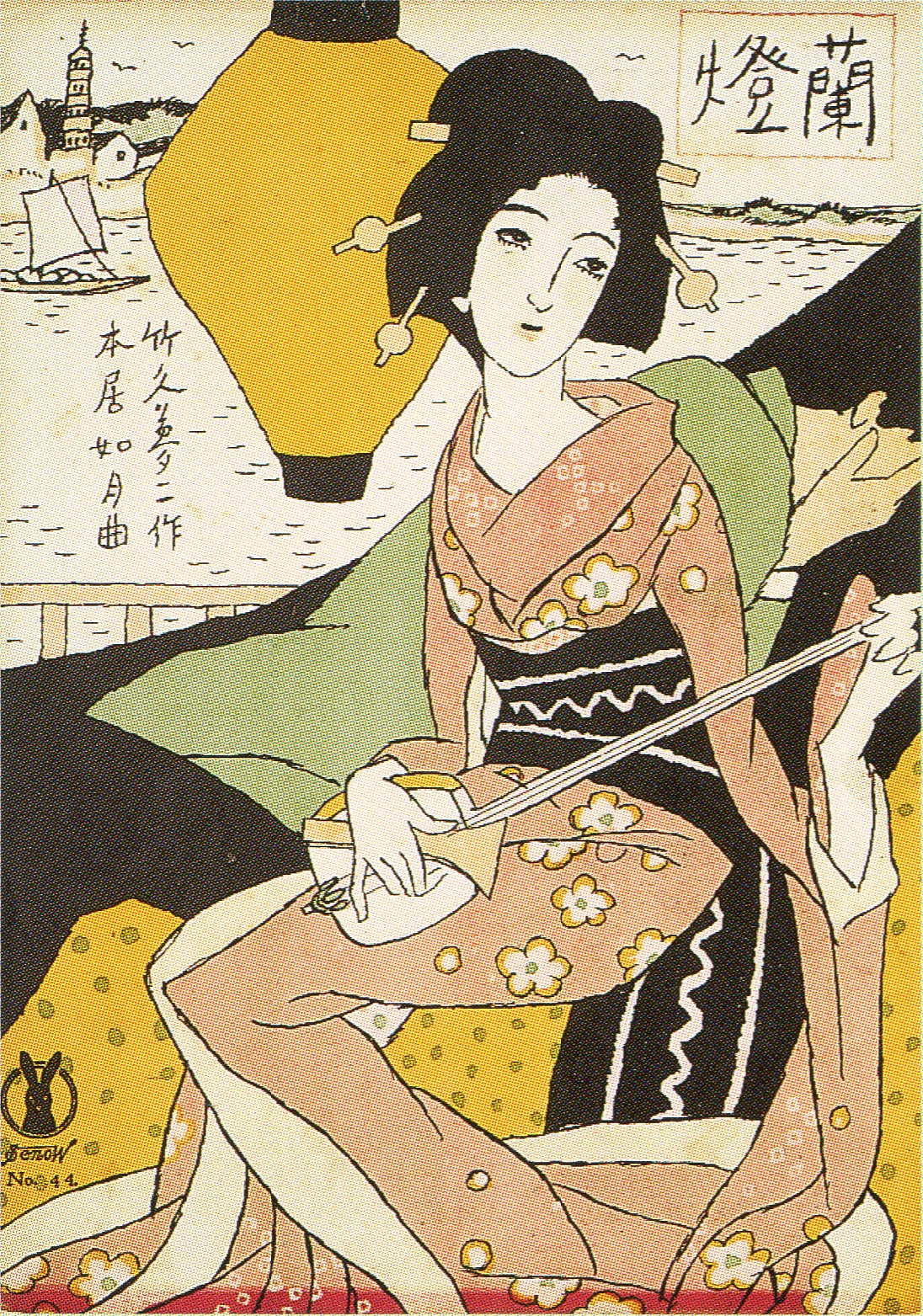
He also left work fusing poem and picture, like the illustrated song collection "Dontaku." For him, perhaps, pictures, words, and design were never separate things. Each of them reaches out into people's daily lives — he seems to have been someone who chose exactly that place.[6]
Not only a painter of beauties
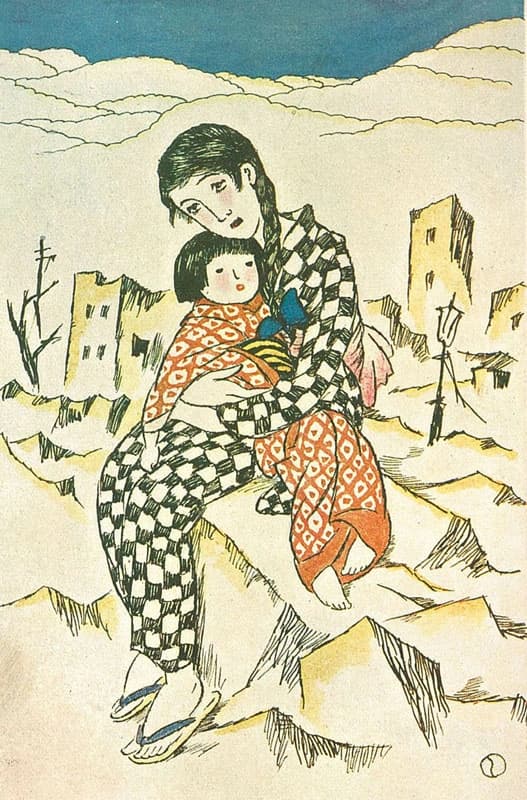
Japanese-style painting, oils, calligraphy, sketches, prints. Yumeji's output spanned a startling range — yet at its root, perhaps, was a certain softness in the way he looked at people. Known for beauties tinged with melancholy, he also painted children and family scenes. In Sisters, in the way the elder sister firmly holds the younger, that softness seems to seep through.[3,5]
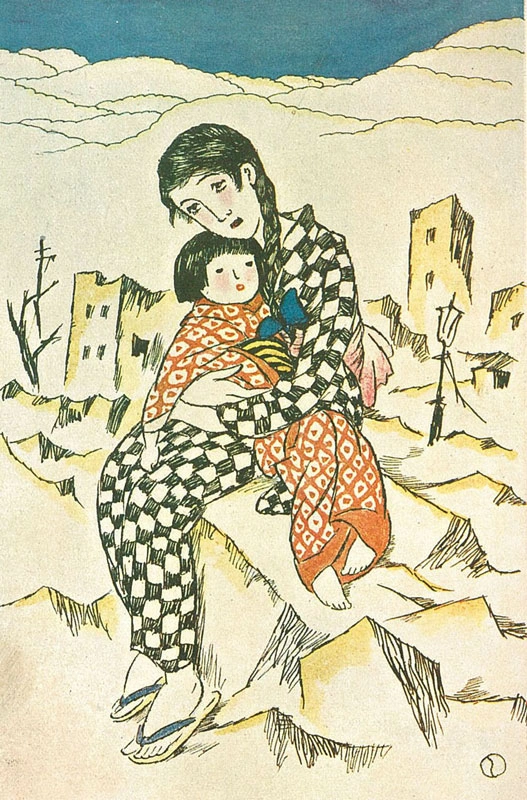
A man never invited into the art world placed beauty in the midst of daily life, and caught the heart of the public. Those sorrow-tinged eyes still speak to us today.